Friday, 27 September 2013

NW

London is the place for me
Zadie Smith rose to fame as a young writer back in 2001 with her debut White Teeth, an ambitious book that won a few awards an introduced to the literary world a new .Despite its success and critical acclaim, I wasn't hugely impressed by a novel that failed to convince me. As an example, I much preferred and enjoyed Monica Ali's Brick Lane, a book that shared with Smith's a certain look at how migrant communities settled in North London.
The fact that both books had been written by two female writers, themselves examples of those very migrants who had arrived in Britain a generation earlier, seemed to herald a new era in multicultural Britain.
A few books on and it is fair to say that Smith's impressive talent hasn't faded away. In fact, quite the opposite, I think.
After the stylish and funny On Beauty, an acid satire of academia across the pond, this talented writer takes us now all the way back to North West London (hence the title); this way, the author stays home turf as this is where she was born.
The book follows the lives of four Londoners who grew up in the same North West council estate; two of them, Leah and Natalie, have been best friends ever since a dramatic event in a swimming pool brought them together. The other two, Felix and Nathan, had led their own lives but through different events, they will eventually encounter their old friends.
It has been said that no other writer has been able to capture London life like this since Dickens. That seems to me rather a statement which I don't feel qualified to agree with or even question. Regardless, Zadie Smith's prose is brilliant, it flows in such a way that one imagines and hears the characters' accents as though they were talking to you. That is where the merits of this novel lay.
NW  grabs you from the very first page with splendid and very well defined characters and a vibrant story (or stories) that resonates with anyone, Londoner or otherwise, who has experienced what urban life is like.
A highly recommend read.


Friday, 6 September 2013

Those who burn books


'Burn them to ashes, then burn the ashes'


Here's a proper classic, one of those books you are meant to read before you die, so I'm I glad I eventually did. Published in 1953, it's worth remembering that the McCarhty era was at its height, so in a way the story  makes more sense when seeing against a climate of censorship and fear, in which intellectual activity is regarded as suspicious by the powers that be.
Bradbury clearly struck gold by imagining a dystopian society that bans books and has firemen burning them rather than putting out fires; it's a bleak scenario indeed, one that at the very least engages the reader in a way that few other novels do, and that's where the true genius of Bradbury's creation lies.
I wouldn't be saying anything new if, as most people have, I link it with other equally unsettling  and disturbing novels such as, of course, Orwell's 1984 and Huxley's Brave New World.
All three share  a somehow prophetic and critical view of Western society, touching subjects that today, decades later, have become commonplace. Conformity, drugs and how our lives are controlled by the media and technology were advanced by these visionaries.
Fahrenheit 451 is the temperature at which book-paper catches fire and burns, apparently.Guy Montag, the main character, is one of those firemen in charge of burning books. However, his life changes when he meets Clarisse, a young girl who is 'seventeen and crazy' whose free-thinking attitude will challenge the fireman's approach and outlook.
It is easy to imagine the influence this book has had not only on other science-fiction writers of the time but also on people with some sort of critical attitude and dislike of totalitarian regimes, particularly given the book's powerful insight into what such a society will look like.
In short, this is a must-read that, sixty years from its publication, still dazzles and intrigues the reader.


Thursday, 22 August 2013

Tweeting misogony

Jane Austen will feature on the £10 notes
It is worrying to see how certain people make use of the anonymity offered by certain social networks to spread hate and abuse. It is one thing to be a pathetic and sad troll who finds solace and -perhaps- a sort of  needed self-esteem by annoying and antagonising other people day in day out: it is a very different one to threaten and insult other users in unacceptable ways.
We have  lately witnessed  a trend whereby users- mostly men- issue death and rape threats to women who have been vocal against different issues affecting women's rights and injustices.
As I mentioned, there have been a few examples of women being subjected to abuse recently, including some well-known campaigners and journalists.
I was particularly interested in the case of activist Caroline Criado-Perez, the woman behind the campaign that asked the Bank of England to reconsider their decision of replacing social reformer Elizabeth Fry by Winston Churchill on the £5 notes. This would mean that no woman, apart from the Queen, would feature on the English bank notes An online petition asking Mervyn King, the Bank of England Governor, to reconsider this eventually succeeded and so Jane Austen will feature on the £10 notes from 2017.
I'd assume that most people would cheer this decision as an example of how a social media campaign has real consequences, even when it comes to powerful institutions such as the Bank of England.
However, this does not seem the case with those who chose to spit their anger and sexist attitude on Twitter, threatening Criado-Perez in such a way that saw the social network being questioned about its policies on how to handle these threats.
At least one man has been arrested by the police and the whole issue has been widely debated, which may or may not deter other people from cowardly hiding behind anonymous accounts to spread hate and get away with it.
Campaigners, regardless of their gender, should feel safe when using the social media to highlight and promote their causes. Let's just hope this is the case from now on.

Wednesday, 10 July 2013

Rewriting History: the people's viewpoint

A people's perspective on history
Howard Zinn was a historian (1922-2010) whose book written in 1980 A People's History of the United States became an instant success and one of the more influential accounts of this country's past. The reason for this phenomenal success ( the book has sold more that two million copies!) is Zinn's different approach, which completely demystifies the official version most students were taught at school. Instead, Zinn chooses to write its book from 'the other side', giving voice to those people whose fate was ignored by those mainstream books.
Its relevance and interest was such that a comic version was imagined and adapted  a few years ago (2008) by political cartoonist Mike Konopackin and senior lecturer Paul Buhle. This is great news for those who find the lengthy original book a bit too much and prefer the more dynamic and visual- albeit less academic- language of comics.
The comic sets off with that eventful  morning in New York on 11 September and the subsequent speecht made by George Bush, full of hatred and vengeance, announcing immediate retaliation. Zinn's answer to that is: they have learned nothing from the twentieth century's events.
After this reflection, the book delves into those events that have shaped the history of the United States but, as mentioned before, not as you know it. Here, you will learn how the white supremacists annihilated the Native Americans; you will learn about the dirty strategies and diplomacy used in Cuba and the Philippines; you will come across familiar names such as Rockefeller, Morgan etc.. early capitalists who amassed vast fortunes on the back of the exploited and humiliated working classes.
Thus, the book goes on to depict the portrait of a nation meddling in any affair that may be beneficial for U.S. interests leaving behind an atrocious trace of massacres and impunity.
Judging by the recent revelations in the form of espionage, WikiLeaks, Guantanamo etc...this nation may be still a long way from learning the lessons Howard Zinn was hoping for: the cycle of stupidity may still continue for a while.
In the meantime, reading this book is a good way of gaining a better understanding of the Empire. 


Wednesday, 3 July 2013

Femen: the topless revolution

Breasts Feed Revolution


The protest movement that started back in 2008 in Kiev, Ukraine, under the name of FEMEN, has become one of the most recognisable brands worldwide.
One thing is clear about this group of young women activists: they pull no punches when it comes to make themselves heard.
Thanks to their trademark approach, which mainly involves organising topless protests against religious institutions, world leaders, international institutions (eg. FIFA), embassies and other targets, FEMEN have also alienated many people, not only from the (predictably) more conservative sectors of society but also from more supposedly liberal and progressive people who dismiss these tactics as counterproductive and even as 'racist colonial feminism'. Feminist groups and Muslim women, among others, have been very critical of FEMEN's strategies.
Nudity, it would appear, still makes people uncomfortable; women's nudity even more so.
Facebook had recently had its moment of glory (again!) when it decided to block FEMEN's account after accusing the activist group of 'promoting pornography and prostitution', something that smacks of double standards.
Either Facebook can't cope with the sight of women shouting and exposing the hypocrisy of a fundamentally corrupted moral system or- perhaps more likely- they find FEMEN's message hard to swallow (perhaps bowing to the pressure coming from high above?).
But they continue-unfazed- their mission, caring very little about what the breast-phobics have to say and if there is something I admire about them is their determination and courage. Their ability to expose the powerful (men) who allow themselves to preach morality is outstanding and remarkable.
You may or may not agree with their ways of protest but if there is something clear about the emergence of FEMEN is that they have brought back to the table feminism and what does being a feminist mean in the 21st century. And just for that, I think, they must be heard and respected.


Wednesday, 12 June 2013

The Mau Mau Uprising


Fighting colonialism


The long shadow of colonialism was still very present last week in Nairobi when William Hague, the British Foreign Secretary, apologised  for the atrocities committed against members of the Kenyan resistance movement known as the Mau Mau in the 1950s on behalf of the British government.
This was a great victory for those 200 elderly members of the Kikuyu people who travelled to the Kenyan capital and, no doubt, the first of many other similar cases in which the UK will have to apologise and compesate financially victims of similar cases of torture and ill-treatment.

The Mau Mau Rebellion was an anti-colonial movement that fought the British in Kenya; like many other African nationalistic movements of that time, their aim was to send the white colonisers back to Europe and take their own destiny in their hands as they had become politically aware of a situation that was oppressing them in their own native land.
By applying the old 'divide and rule' technique, the British were able to undermine the Mau Mau, so widespread support for their cause was never really achieved.
The rebellion was finally crushed by 1956 but the way for a process that would lead to the eventual  Kenyan independence had been somehow paved with this uprising whose cause and brutal treatment received is now acknowledged.
It has taken 60  long years for a senior member of the British government to apologise, but future expressions of regret will be heard again.

Wednesday, 29 May 2013

Striking where it hurts

Taking a stand
There are few topics that bring so much controversy as the Israel-Palestine endless dispute; whether it be an article, a comment or a gesture, it's bound to create a heated and - in many an occasion- aggressive debate that very rarely becomes a constructive exchange that may somehow bring closer both sides, or at least some understanding.
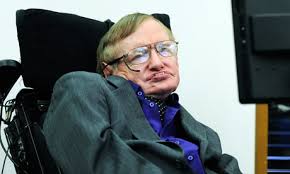
The boycott of an Israeli conference earlier this month by one of the world's leading scientists as a protest for Israel's treatment of Palestinians was therefore the kind of political stand that would not leave anyone indifferent; and, of course, it didn't.
As predicted, the furore caused by the Cambridge University Professor was extraordinary; arguments on both sides tried to make their point and show how Hawking was right/wrong.
This is not the first time a well-known figure chooses to publicly condemn Israel for its behaviour regarding Palestine; and it won't be the last one.
What perhaps sets this protest apart is the fact that Stephen Hawking was always considered as a brilliant mind who rarely intervened in politics; that someone who is widely respected for his scientific achievements as well as his  fight against a degenerative disease decides to pull out of an academic conference in Jerusalem was perhaps an unexpected move.
By doing so, Hawking has brought to the table the old debate on the relevance/appropriateness of a boycott to Isreal,and  most particularly in this case, the academic boycott.
While I'm not 100% sure of the effectiveness of an academic boycott of Israeli per se, I can clearly see why Hawking decided not to rub shoulders with Shimon Peres, Israel's President, at a conference.
The debate is out there;unfortunately, there won't be a negotiated solution to the conflict any time soon (in my opinion, anyway) but Hawking's unequivocal gesture should make people think.